
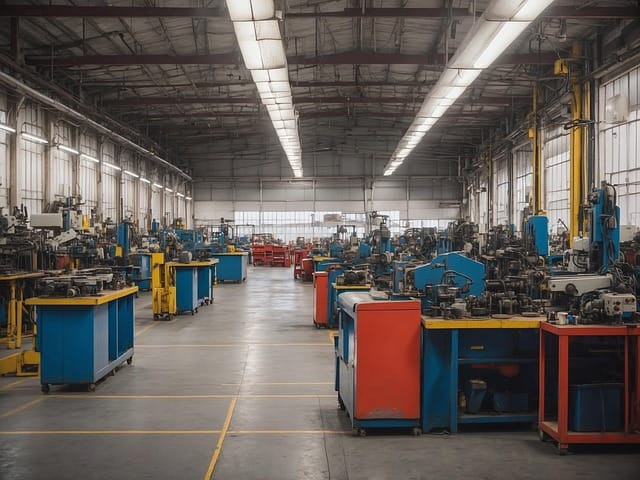
In the oil and gas industry, where systems operate under extreme temperatures, pressures, and environmental conditions, failure is not an option. One of the most crucial—yet often overlooked—components in these critical systems is the bolt. Bolts may seem simple, but in energy applications, they must meet exacting standards of material integrity, dimensional accuracy, and performance reliability.
Enter AP Energy Products, a leading manufacturer of API 20E-compliant bolting solutions. With a deep-rooted commitment to precision, quality, and engineering excellence, AP Energy doesn’t just produce bolts—they engineer solutions. In this article, we explore the manufacturing process behind their API 20E bolting and highlight the precision practices that ensure every fastener meets or exceeds industry standards.
Understanding API 20E: The Standard for Critical Bolting
The API 20E standard, issued by the American Petroleum Institute, defines the requirements for bolting used in critical applications in the petroleum and natural gas industries. It outlines expectations for material selection, manufacturing methods, mechanical properties, heat treatment, inspection, and documentation.
API 20E includes three Bolting Specification Levels (BSL-1, BSL-2, BSL-3), each escalating in complexity and stringency:
-
BSL-1: Standard applications
-
BSL-2: High-pressure, non-safety-critical applications
-
BSL-3: Safety-critical service (e.g., subsea, wellhead, blowout preventers)
Manufacturing to these levels requires strict process control, complete traceability, and compliance with international quality systems—areas where AP Energy Products excels.
Step-by-Step: The AP Energy API 20E Manufacturing Process
Let’s walk through the core stages of how AP Energy Products manufactures API 20E bolting, highlighting the attention to detail and precision that defines their process.
1. Material Selection and Procurement
The foundation of a high-quality bolt is high-grade raw material. AP Energy begins with a stringent procurement process, sourcing bar stock and forgings only from approved mills with proven track records and documented heat traceability.
Materials are selected based on project requirements and may include:
-
Carbon steel (e.g., ASTM A193 B7)
-
Stainless steel
-
Duplex and Super Duplex
-
Nickel alloys (Inconel 718, Monel)
-
Exotic alloys for extreme environments
Each material batch comes with mill test reports (MTRs), certifying chemical and mechanical properties in compliance with the applicable standards. These documents form the backbone of AP Energy’s traceability program.
2. Cutting and Initial Machining
Once material is verified, it’s cut to size using precision CNC sawing or other cutting methods suited to the alloy. From there, the workpieces enter turning centers or lathes, where threads, head shapes, and initial dimensions are machined to close tolerances.
During this phase, dimensional accuracy is critical. AP Energy uses advanced metrology tools and in-process inspection to ensure each bolt conforms to customer drawings and relevant ASTM/API specifications.
3. Heat Treatment
Heat treatment is often required to enhance mechanical properties like tensile strength, yield strength, and impact resistance. AP Energy utilizes in-house or audited heat treatment facilities capable of meeting the strict thermal cycles dictated by:
-
API 20E
-
ASTM A193 / A320
-
Customer specifications
Process controls ensure uniform heating and cooling, avoiding embrittlement or distortion. Following heat treatment, parts are tested to verify hardness, strength, and microstructure—confirming the transformation meets metallurgical requirements.
4. Non-Destructive Testing (NDT)
Especially for BSL-2 and BSL-3 bolting, non-destructive testing is a key requirement. AP Energy performs or coordinates a range of NDT techniques, including:
-
Magnetic Particle Inspection (MPI): Detects surface cracks and discontinuities
-
Ultrasonic Testing (UT): Finds internal flaws or inclusions
-
Dye Penetrant Testing (DPT): Identifies surface-breaking defects in non-ferrous materials
These tests are conducted by certified NDT personnel and documented thoroughly, ensuring each fastener passes integrity checks without compromising the material.
5. Thread Rolling and Final Machining
After heat treatment and NDT, threads are rolled or cut based on specification and application. Thread rolling, which cold-forms the thread profile, is preferred for high-strength bolts as it enhances fatigue resistance.
AP Energy uses calibrated thread gauges and optical comparators to ensure thread accuracy—because even a slight deviation in pitch or depth can compromise bolt performance in high-pressure joints.
6. Coating and Surface Finishing
Many applications require corrosion protection, especially for subsea or offshore use. AP Energy offers various coating and plating options, including:
-
Zinc plating
-
PTFE coatings (e.g., Xylan)
-
Phosphate coating
-
Hot-dip galvanizing
Each coating is applied with strict thickness control and documented for compliance. Surface roughness, adhesion, and uniformity are verified to ensure the bolt performs under real-world conditions.
7. Inspection and Quality Assurance
Every finished part undergoes comprehensive inspection:
-
Dimensional checks with micrometers, calipers, and thread gauges
-
Mechanical testing (tensile, yield, elongation, Charpy impact testing if required)
-
Hardness testing (Brinell, Rockwell, or Vickers, depending on spec)
-
Visual inspection for surface finish, markings, and defects
All results are recorded and compiled into a complete Quality Dossier, which includes:
-
Material Test Reports (MTRs)
-
Heat treatment records
-
NDT certificates
-
Coating reports
-
Final inspection forms
This documentation ensures 100% traceability from raw material to finished part—an essential requirement under API 20E.
Built for Compliance: API Q1 and ISO 9001 Certified
Manufacturing excellence at AP Energy is backed by a robust Quality Management System (QMS) certified to:
-
API Q1 – the oil and gas industry’s most rigorous quality standard
-
ISO 9001 – internationally recognized quality system certification
These systems govern every part of the manufacturing cycle, from supplier qualification to internal audits and continuous improvement. Compliance isn’t an afterthought—it’s a way of working.
Precision Meets Performance: Why It Matters
In oil and gas, the cost of a failed bolt can be catastrophic—equipment damage, safety risks, environmental exposure, and millions in lost production. That’s why companies worldwide choose AP Energy Products. They don’t just get a bolt—they get peace of mind.
With AP Energy’s precision-first approach, customers know that each API 20E fastener:
-
Meets or exceeds the application’s mechanical demands
-
Is manufactured with full traceability and compliance
-
Will perform reliably under the most demanding conditions