
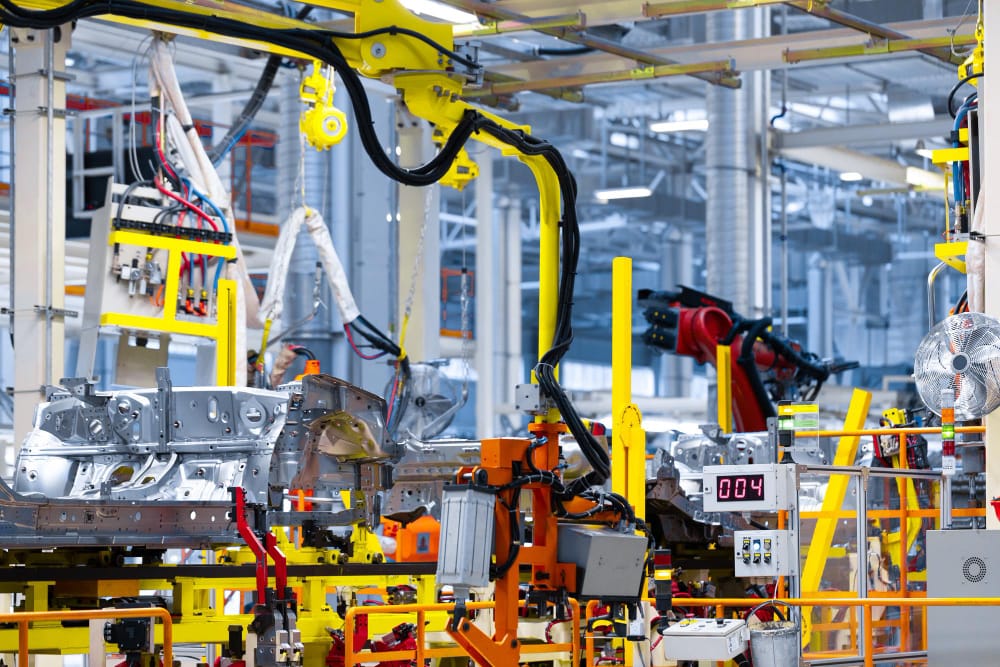
When it comes to manufacturing critical bolting for the oil and gas industry, few names command as much trust and respect as AP Energy Products. Known globally for its precision-engineered API 20E bolting solutions, the company has built its reputation not just on product performance, but on the cutting-edge infrastructure, disciplined processes, and skilled people behind the scenes.
In this article, we take you on a behind-the-scenes tour of AP Energy Products’ state-of-the-art manufacturing facility, giving you a first-hand look at the machinery, workflows, and quality practices that drive their world-class bolting solutions.
Setting the Scene: Where Precision Begins
Located in a strategically positioned industrial zone in the U.S., AP Energy Products’ facility spans tens of thousands of square feet of clean, organized, and highly efficient manufacturing space. From the moment you walk through the doors, one thing is immediately clear—this is a plant built for precision.
Everything from raw material handling to finished goods inspection is designed with API 20E compliance and traceability in mind. Every aisle, workbench, and storage rack serves a purpose in the company’s mission to produce bolting components that meet the most demanding standards in oil and gas.
Stage 1: Raw Material Receiving and Identification
Our factory tour begins where every bolt begins—raw material intake. Whether it’s carbon steel, stainless, duplex, or exotic alloys like Inconel and A286, each batch of raw bar stock arrives with full material test reports (MTRs) and is checked against specifications.
- Positive Material Identification (PMI) tools are used to confirm alloy chemistry.
- Materials are tagged with unique identifiers for full traceability.
- Barcodes link each heat lot to digital records in the company’s ERP system.
This rigorous start ensures that no non-conforming material ever enters the production flow.
Stage 2: Cutting and Pre-Machining
Next, the approved material moves into the cutting and machining department, where it’s cut to precise lengths based on customer drawings and order specifications.
High-speed CNC band saws and lathes handle this task, producing smooth, burr-free blanks ready for turning and threading.
Here, the emphasis is on:
- Dimensional accuracy
- Minimal material waste
- Operator safety and speed
With real-time monitoring and precision calibration, the cutting section sets the tone for the exacting tolerances that follow throughout the process.
Stage 3: CNC Machining and Threading
Now we move into the heart of the factory—the CNC machining bay. This is where raw steel is transformed into critical components.
- Multi-axis CNC turning centers create thread profiles, head configurations, and seating surfaces with micrometer-level accuracy.
- Thread rolling machines form stronger, fatigue-resistant threads compared to cut threads—essential for high-pressure applications.
- Tooling is changed regularly to avoid wear-induced defects.
- Machines are programmed and operated by seasoned machinists trained in API standards.
Each part is checked with calibrated thread gauges, optical comparators, and micrometers before it leaves the bay.
This stage is a blend of technology and craftsmanship, where decades of know-how meet automated precision.
Stage 4: Heat Treatment and Metallurgical Control
For bolting used in extreme conditions, heat treatment is a vital step. Depending on the material and application, this can involve:
- Quenching and tempering
- Annealing
- Normalizing
- Solution treatment and aging (for nickel alloys)
AP Energy uses in-house or tightly controlled external heat treaters with detailed process sheets and monitoring systems.
Post-treatment, the bolts undergo:
- Hardness testing
- Tensile testing
- Charpy impact tests (for BSL-2/3 products)
- Microstructure analysis
This ensures every piece meets its required mechanical and metallurgical properties—a non-negotiable aspect of API 20E.
Stage 5: Non-Destructive Testing (NDT) and Inspection
In the NDT area, trained and certified technicians perform:
- Magnetic Particle Inspection (MPI) – for detecting surface cracks
- Ultrasonic Testing (UT) – for internal flaws
- Dye Penetrant Testing (DPT) – for stainless or non-magnetic alloys
NDT is especially critical for BSL-2 and BSL-3 bolting, which is used in safety-critical service like subsea and pressure control applications.
The inspection is meticulous. Nothing passes without a clean bill of integrity from the NDT team.
Stage 6: Coating and Surface Finishing
After passing inspection, bolts move to the coating and finishing department. Surface treatments are not just for appearance—they protect against corrosion and ensure proper installation.
Coating options include:
- Zinc or cadmium plating
- PTFE (Xylan) coatings
- Hot-dip galvanizing
- Phosphate or black oxide finishes
Each coating is applied in controlled conditions, measured for thickness, and documented for compliance.
Surface roughness, torque-tension relationships, and thread lubrication are also tested, ensuring real-world performance matches lab results.
Stage 7: Final Inspection and Packing
Before packaging, each bolt undergoes final dimensional and visual inspections by the quality team.
- All documentation (MTRs, heat treat certs, NDT reports, and inspection sheets) is compiled into a comprehensive data book.
- The product is labeled, tagged, and barcoded for traceability.
- Packaging is tailored to protect parts during transit and maintain identification.
Even the smallest details—thread caps, rust inhibitors, custom labels—are chosen to reflect AP Energy’s commitment to first-class delivery.
Beyond Machines: The Human Element
While the factory is filled with automation and high-end equipment, the real power lies in AP Energy’s team. From machinists and quality inspectors to logistics staff and engineers, every employee is trained to:
- Understand the importance of API 20E compliance
- Identify and correct issues before they reach customers
- Contribute to a culture of continuous improvement and quality excellence
- The factory isn’t just efficient—it’s a living, learning environment driven by people who take pride in every bolt they produce.
The Result: Bolting You Can Trust
Walking through the factory floor, one thing becomes abundantly clear—AP Energy Products has designed every inch of its manufacturing space to support one mission: delivering exceptional bolting solutions that exceed customer expectations.
Whether it’s a batch of B7 studs for a refinery or Inconel 718 bolts for a subsea wellhead, customers can trust that:
- Every bolt has a documented lineage.
- Every test has been completed and verified.
- Every part has been inspected, certified, and prepared for peak performance.